
How many restrooms does a county fair need?
Start with attendance, not gut feel. A one-day fair pulling a few thousand people needs a different plan than a three-day run with a beer tent and a grandstand. The safe planning ratio most fair organizers use is one standard unit per 50 to 100 attendees, tightened up if alcohol is served, because lines back up fast once people start drinking. For a fairground with paid staff working the gates, concessions, and rides, OSHA 1926.51(c)(1) sets a separate ratio: one toilet for 20 workers or fewer, then one toilet and one urinal per 40 workers as staffing climbs past that. Vendors count as workers too, so tally your food trucks and ride crews separately from your gate count.
Layout matters as much as the number. Spread units in clusters near the grandstand, the midway, and the food court instead of one bank by the entrance; that cuts walking distance and keeps any single line from choking foot traffic. We size most Tinley Park fairs with a mix of standard porta potty rental units for general crowd use and a few deluxe flushable porta potty units near VIP or sponsor areas. Every cluster needs at least one accessible unit under ADA Standards 213.2, with a 60 inch turning circle inside per ADA Standards 304.3.1 and a 32 inch clear door opening per ADA Standards 404.2.3. If your fair draws from Oak Forest, 5.7 miles northeast, or Country Club Hills, 5.9 miles east, plan for overflow parking crowds pushing toward the nearest cluster, not just the main gate.
What restroom setup works best for a multi-day fair?
Multi-day fairs need a servicing rhythm built in from day one, not bolted on after the lines get long. ANSI/PSAI Z4.3 sets a baseline service interval of once per week for up to 10 users over a 40 hour stretch, but a three-day fair with thousands of daily visitors needs servicing scheduled once or twice a day, timed around gate closing so trucks aren't fighting midway traffic. We build that schedule with you before the first unit hits the ground, tied to your actual attendance curve rather than a generic weekly swing.
Handwashing has to sit next to the toilets, not across the fairground. Under 29 CFR 1910.141(d)(2), handwashing stations need actual soap and towels or a hand-drying device; sanitizer alone doesn't satisfy it. We pair handwashing station rental units at every restroom cluster, and if your fair runs a livestock barn or 4-H area with hand-labor work happening on site, that setup also lines up with the field sanitation intent behind OSHA 1928.110. Food vendor rows get their own portable sink rental placement, separate from public restroom clusters, so grease and food prep never cross paths with restroom traffic.
For fairs with a grandstand or main stage, an event restroom rental plan usually blends standard units with a couple of ADA accessible porta potty placements near ramp access, since ADA Standards 405.2 caps ramp slope at 1:12 and that changes where you can actually set a unit. If your event runs closer to Mokena, 6.9 miles southwest, or Frankfort, 8.2 miles southwest, the same planning approach applies; distance from our yard doesn't change the ratio math.
Should we rent a restroom trailer instead of standard units?
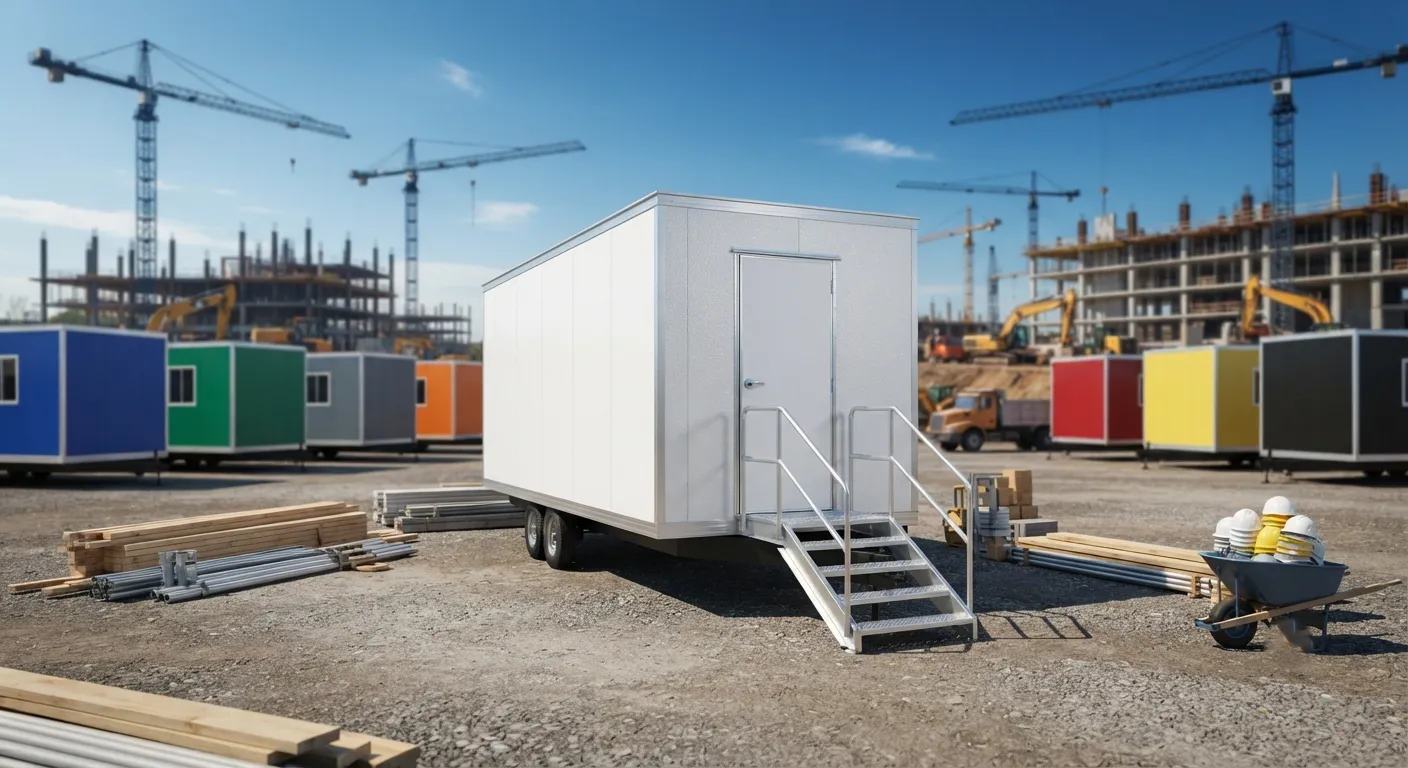
For a fair with sponsor tents, a beer garden, or a ticketed VIP section, a restroom trailer often beats a bank of standard units on comfort and perception. A 4-stall restroom trailer or 8-stall restroom trailer handles higher-traffic zones without the line backing into the midway, and a luxury restroom trailer fits a fair with a gala tent or a headline concert slot. Standard units still make sense for the general grounds and parking areas, where volume matters more than finish. Most Tinley Park fairs end up running both: trailers for the premium zones, standard units everywhere else, which is also how we price out most festival restroom rental and concert restroom rental jobs on the fair circuit.
| unit | duration | typical price |
|---|---|---|
| standard | weekend | $250 |
| standard | event | $400 |
| deluxe | weekend | not listed, see week rate |
| ada | weekend | $240 |
| trailer | weekend | $2,000 |
| trailer | event | $3,500 |
Delivery for fairground jobs runs on its own weekend delivery fee, separate from unit rental, and that fee scales with distance and access, not just headcount. If your grounds sit inside Matteson's radius, 8.2 miles southeast, mention that when you request pricing so we can quote delivery accurately.
How far in advance should we book fair restrooms?
Book as soon as your date and attendance estimate are set, ideally a few months out for a weekend fair. Fairground season books up fast across Tinley Park, and trailer units in particular get reserved early. Request a quote with your headcount and layout as soon as you have it.
Do we need a permit for portable restrooms on fairgrounds?
Placement in a public right of way or on municipal property needs confirming with the city before delivery. We do not guess at permit rules; check with Tinley Park directly, and see our porta potty permit requirements page for what to ask.
What happens if our fair runs long or attendance is higher than expected?
Call us. We keep extra units in rotation for exactly this. Our emergency porta potty rental service can add units mid-event if a gate count runs past your original estimate.
Can we get lighting for restroom areas after dark?
Yes. A light tower rental placed near restroom clusters keeps paths lit and lines visible once the sun goes down, which matters for evening fair hours and any grandstand event running past dusk.
How do we figure out the right mix of unit types?
Start with our how many porta potties do I need guide, then call with your attendance number, layout, and whether alcohol will be served. We build the final mix from there, unit by unit.
Next step
Get a delivery date
Tell us the address, the dates and the headcount. We size the order and confirm the route.