
How fast can Tinley Park Porta Pros respond to a sanitation emergency?
Flooding, a collapsed line, or a burst main does not wait for business hours, and neither does this. Tinley Park Porta Pros treats storm and utility failures as priority calls, and same-day and next-day delivery is the standard target once a site is confirmed safe for a truck. Check emergency porta potty rental for the fastest path to a unit, or start with a request a quote if the situation is not yet critical. A roll-off delivery needs about 60 feet of straight clearance behind the truck, and a portable restroom delivery needs similar room, so downed trees or flooded driveways in Tinley Park can slow a truck even after the storm clears. If a driveway is blocked, crews will work with you to find the nearest clear pad, whether that is a curb line or a neighboring lot. For households anywhere from Oak Forest, 5.7 miles northeast, to Mokena, 6.9 miles southwest, the same response window applies. Multi-unit emergencies, like an apartment building with a sewage backup, often need more than one toilet; the how many porta potties do I need guide walks through sizing for a household versus a work crew. For a broader look at what gets deployed alongside toilets during a disaster response, see construction site services, since fencing, lighting and power often show up on the same call.
What sanitation equipment gets deployed during a disaster response?
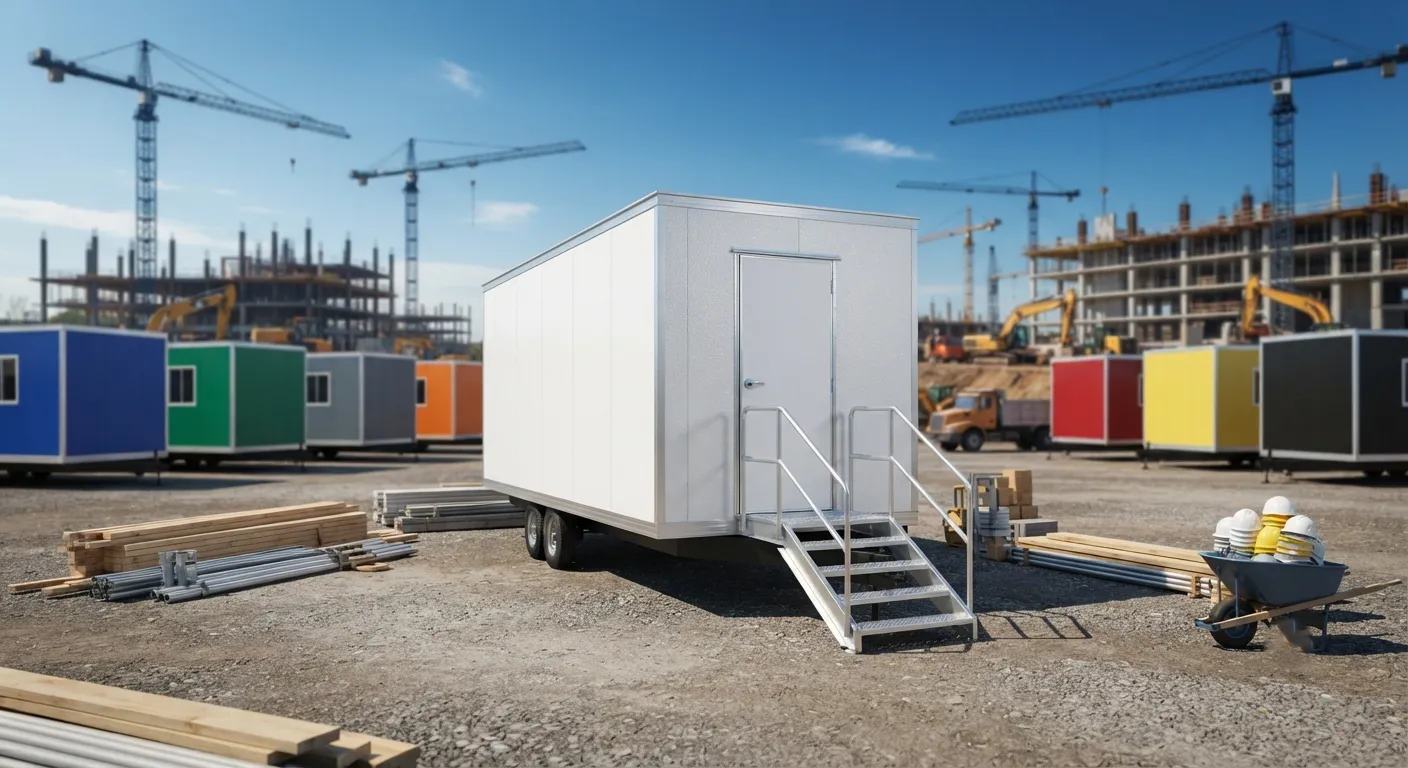
Portable toilets are the first thing out the door, but they are rarely the only thing a bad flood or sewer failure calls for. A standard porta potty rental stands about 92 inches tall and about 44 by 48 inches on the ground, small enough to place on a driveway apron or a strip of yard. Households needing something closer to normal plumbing can ask about a deluxe flushable porta potty, and larger relief operations, shelters or multi-family properties often bring in a restroom trailer rental instead, since a trailer handles more people per hour than a bank of single units. Handwashing matters just as much as toilets after a sewage event: OSHA 1926.51(a)(1) calls for an adequate supply of potable water at any workplace, and 29 CFR 1910.141(d)2) requires soap and towels or a hand-drying device at wash stations, not hand sanitizer alone. A handwashing station rental or portable sink rental covers that requirement for cleanup crews and displaced households alike. Debris from flood damage, drywall, insulation, ruined furniture, needs somewhere to go, and a roll-off dumpster rental or a same-day 10 yard dumpster rental clears it out fast. If the area needs to be secured while repairs happen, temporary fence rental keeps people and pets away from hazards.
Do disaster relief rentals cost more than a standard rental?
No, pricing follows the same bands as any short-term rental; disaster response does not carry a separate rate card. A standard unit runs 100 to 350 dollars a day depending on quantity and site access, and a weekend rate for a standard unit typically lands between 125 and 400 dollars, useful for a two or three day power outage after a storm.
| unit | day | week | month |
|---|---|---|---|
| standard | $100 - $350 | $130 - $500 | $125 - $325 |
| ada | $200 - $400 | $240 - $400 | - |
| dumpster | $51 - $112 | $426 - $778 | $778 - $1500 |
A delivery fee separate from the unit rate typically runs 100 to 500 dollars for a single-day emergency drop, reflecting after-hours routing more than distance. Full detail on how these numbers get set lives at porta potty rental cost and porta potty rental per day; if the outage runs longer than expected, monthly porta potty rental pricing is usually the better deal than daily rates stacked up. Households near Frankfort, 8.2 miles southwest of Tinley Park, or Matteson, 8.2 miles southeast, fall inside the same standard delivery pricing.
Do I need a permit for emergency toilet placement during a disaster?
Placement in the public right of way needs confirming with the city before a unit goes curbside; Tinley Park Porta Pros can flag this during scheduling, but the property owner or manager should still check with the village. Private driveways and yards typically do not require the same review. See porta potty permit requirements for more.
How many toilets does a household or shelter need after a disaster?
For a single household, one standard unit usually covers the outage. Group shelters follow OSHA 1926.51(c), one toilet for 20 workers or fewer, though that ratio was written for job sites, not displaced residents, so plan generously. See how many porta potties do I need.
Can a restroom trailer run without a sewer connection?
Yes, restroom trailers hold their own tanks and can run off a generator or shore power, which makes them useful when both water and sewer service are down. See restroom trailer rental for stall configurations.
Is an ADA-accessible unit available on short notice?
Yes, an ADA unit typically runs 200 to 400 dollars a day and can be delivered alongside standard units. ADA Standards 213.2 calls for at least one accessible unit in any cluster. See ADA accessible porta potty.
What if the disaster affects a septic system instead of a sewer line?
Flooded septic systems can back up or fail outright, and pumping is often the first fix; a typical tank is pumped every 3 to 5 years but flooding can force an off-schedule visit. See emergency septic service.
Next step
Get a delivery date
Tell us the address, the dates and the headcount. We size the order and confirm the route.